
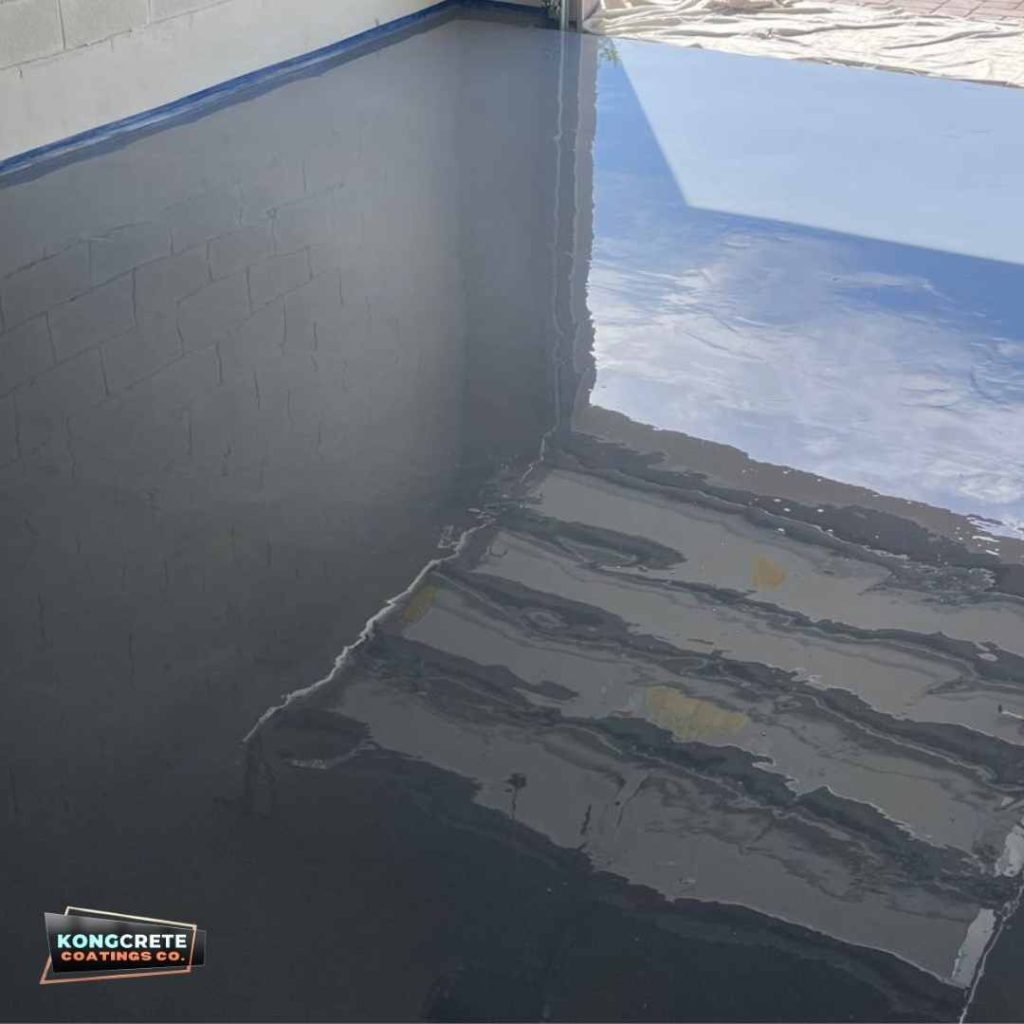
Standard epoxy often fails on Florida driveways, patios, and lanais because outdoor slabs face intense sun, extreme heat, rising moisture, and hot-tire stress that indoor garage floors do not. These conditions break down typical aromatic epoxy, causing yellowing, chalking, and peeling within a few years.
For lasting results, specifying a UV-stable polyaspartic or polyurea coating with a textured, slip-resistant finish is key, while a penetrating sealer often provides a practical, lower-cost option when coating is not suitable.
Florida Sun: Why UV Exposure Wrecks Standard Epoxy Outdoors
Direct sunlight in Florida is relentless. Standard epoxy on driveways, patios, and lanais faces daily UV radiation that quickly degrades the finish. This type of epoxy, called aromatic epoxy, is not built to withstand continuous sun exposure. Within a year or two, the surface often begins to yellow and lose its original luster. The breakdown is not only cosmetic. As the epoxy’s chemical structure weakens under UV, the coating can chalk, become brittle, and lose its protective qualities.
That early shine fades fast, and the surface may start to look patchy or worn long before you expect.
For outdoor spaces in Orlando, a UV-stable system is essential. We recommend specifying a polyaspartic flake system for patios, lanais, and exposed driveways. Polyaspartic chemistry is designed to resist UV damage, keeping color and gloss far longer than standard options. Our polyaspartic garage floor coatings also deliver moisture and stain resistance that stands up to local weather. For those comparing options for epoxy floor installation in Orlando, choosing the right chemistry means better performance and a surface that stays attractive through years of sun.
Aromatic vs. Aliphatic: The Chemistry That Dictates Durability
Selecting the right chemistry for an outdoor coating determines how long the surface will protect and look its best.
- Aromatic epoxy: This type of epoxy is the standard choice for many indoor garages, but it does not hold up under Florida’s sun. Aromatic epoxy has a chemical structure that breaks down when exposed to UV rays. As a result, outdoor surfaces coated with aromatic epoxy often yellow and chalk within a few years, losing both appearance and protection.
- Aliphatic polyaspartic and polyurea: These advanced chemistries are engineered for outdoor durability. Aliphatic compounds resist UV damage, so they maintain color and gloss even with years of sun exposure. Polyaspartic and polyurea coatings also cure quickly and provide strong resistance to moisture and stains, making them a better match for Orlando’s patios, lanais, and driveways.
- Why chemistry matters: The durability difference is not about brand or price, but the molecular structure of the coating. Aromatic epoxy is prone to rapid degradation outside, while aliphatic systems offer longer-lasting performance. Choosing a UV-stable chemistry is key for surfaces that face direct sunlight and Florida’s frequent rain.
How Heat Stress Causes Orlando’s Scorching Slabs and Epoxy Breakdown
Florida’s driveways, patios, and lanais reach extreme surface temperatures during Orlando’s hottest months. Concrete exposed to direct sunlight can climb well above 130°F, causing it to expand against any coating on top. Standard epoxy does not flex or dissipate heat easily. As the slab heats and cools, the rigid film of aromatic epoxy struggles to keep up. This repeated expansion and contraction creates internal stress, which often leads to cracks, peeling, or blistering in the coating long before its full lifespan.
The problem is amplified on dark-colored surfaces or those with no shade, where heat build-up is most intense. Even a professionally installed epoxy floor coating in Orlando faces this challenge if the chemistry is not designed for high heat and outdoor movement. Choosing a system made for Florida’s climate brings real benefits. Polyaspartic and polyurea coatings resist heat-related damage and remain flexible enough to handle slab movement. For homeowners, this means less risk of the unsightly failures seen with basic epoxies.
Investing in outdoor-rated chemistry and a textured, slip-resistant finish helps surfaces stay attractive and safe, even after years of summer sun and rising temperatures.
Vapor Drive: How Moisture from Below Causes Coating Failure
Moisture rising from below the concrete, known as vapor drive, poses a serious threat to any outdoor epoxy floor coating in Orlando.
- When a slab lacks a proper moisture barrier, water vapor travels upward from the ground. This pressure can get trapped under a non-breathable epoxy layer, forcing the coating to blister, peel, or delaminate. According to guidance summarized by Slideshare, high humidity and improper substrate compatibility are major reasons epoxy floors fail, especially outdoors where vapor movement is common.
- Surface preparation alone cannot solve vapor issues. Even the best prep work and primer will not prevent failure if the underlying concrete allows too much moisture to pass through. Testing the concrete for moisture before installation is a smart step to avoid these problems.
- For patios and driveways in Central Florida, selecting a coating system that manages vapor is essential. Polyaspartic and polyurea coatings offer improved breathability and bond strength. In some cases, a penetrating sealer may be the smarter, lower-cost choice, since it does not form a film that traps vapor, reducing the risk of bubbling or peeling over time.
Hot-Tire Shear: Driveway Turns That Peel Your Coating
Hot-tire shear is a key reason a driveway coating can fail even when the concrete was prepared carefully. Turning, braking and repeated vehicle loading create twisting forces that are much more severe than those on a typical indoor garage floor. On an exposed Orlando driveway, heat from the pavement and tires can compound that stress, causing a rigid or poorly matched film to lift, especially in curved or heavily trafficked tire paths. Patios and lanais generally avoid vehicle shear, but they still need a system rated for exterior exposure rather than an indoor epoxy selected only for appearance.
For a driveway, ask whether the proposed system is intended for exterior concrete and repeated vehicle traffic, and whether its topcoat remains suitable under Central Florida sun and heat. A UV-stable aliphatic polyaspartic or polyurea system may be a better fit than standard aromatic epoxy, but product specifications, surface preparation, moisture conditions and application quality still determine performance.
If the slab has movement, cracking, spalling or persistent moisture, repairing or sealing it may be more sensible than installing a film coating that could peel under combined vapor pressure, heat and tire movement.
Texture Matters: Preventing Slips on Rain-Soaked Patios and Lanais
For a rain-exposed Orlando patio or lanai, the finish must provide traction as well as weather resistance.
- A smooth coating can become slippery when rain, pool water or condensation covers the surface. The risk increases where water lingers, so drainage, slope and routine removal of leaves or standing water matter alongside the coating choice.
- Broadcast flakes or compatible aggregate create a textured profile that improves footing compared with a smooth film. The texture can also add visual depth and help make minor variations in the concrete less noticeable.
- Texture must be distributed consistently rather than concentrated in isolated areas. Ask the installer how the system controls aggregate coverage, seals the texture and avoids sharp or excessively rough spots that could hinder cleaning or bare-foot use.
- A UV-stable outdoor system, such as one using an aliphatic polyaspartic or polyurea topcoat, should be selected with the texture method as a complete system. Request the manufacturer’s documented slip-resistance information for the intended wet application, particularly near pools.
- For Orlando homes, specifying a textured finish before installation is more practical than trying to correct a slippery surface afterward. A sample area can help confirm traction, appearance, cleanability and comfort underfoot before the full patio or lanai is coated.
Garage Epoxy Indoors vs. Outdoor Coating Demands
Choosing a garage floor epoxy for Orlando often means comparing systems meant for indoor protection with the much tougher demands of outdoor slabs.
- Standard epoxy works well in enclosed garages, where surfaces are shaded and protected from direct Florida sun. These indoor environments face less UV exposure, cooler temperatures, and limited contact with heavy rain or vapor drive. For garages, the main threats are tire traffic and occasional moisture, so an aromatic epoxy can last several years before showing wear.
- Outdoor driveways, patios, and lanais deal with far more severe stresses than a typical garage. Unroofed surfaces must withstand daily sunlight, soaking rain, and rapid temperature swings. These conditions break down ordinary epoxy quickly, causing yellowing and chalking in as little as a year or two. Even a quality installation struggles to keep up with the intense Florida climate.
- A key difference is that outdoor slabs have no vapor barrier, so moisture moves up through the concrete. This vapor drive can lift or blister a standard epoxy, especially if the coating forms a non-breathable film. Polyaspartic and polyurea systems, when chosen for UV stability and moisture management, are better suited for exposed areas.
- Matching the right coating means considering more than appearance or cost. Outdoor surfaces need a system that addresses UV, moisture, heat, and slip resistance. For some driveways or patios, a non-film-forming penetrating sealer may be the smarter and more affordable answer, especially where active moisture or cracking is an issue.
Polyaspartic and Polyurea: UV-Stable Solutions for Orlando Homes
Selecting a coating that holds up outdoors in Orlando means understanding why polyaspartic and polyurea systems outperform standard epoxy on driveways, patios, and lanais.
- Polyaspartic coatings are engineered for UV stability, helping surfaces resist yellowing and fading even in direct Florida sun. Polyaspartic is recommended for pool decks and patios that see full sunlight because it keeps its color and finish over time.
- Polyurea coatings also deliver strong UV and moisture resistance, making them a smart choice for outdoor areas. These systems form a tough, flexible layer that can handle expansion, contraction, and heavy rain without breaking down like aromatic epoxy.
- Both polyaspartic and polyurea options cure quickly, allowing for faster project completion and less downtime for the homeowner. In many cases, these coatings can be installed in just one day, reducing disruption and returning the space to use much sooner than traditional systems.
- The texture of a polyaspartic flake floor is another key benefit. It creates a slip-resistant surface that stays safer in wet weather and around pools, which is crucial in Central Florida’s rainy climate.
- For driveways, patios, and lanais, specifying a UV-stable polyaspartic or polyurea system with a textured finish means longer-lasting beauty and less maintenance. This approach addresses the unique outdoor challenges that standard epoxy cannot handle, protecting property value while delivering peace of mind.
Affordable Alternative: How a Penetrating Sealer May Save You Money
A homeowner in Orlando faces a key decision when considering how to protect an outdoor driveway, patio, or lanai. Penetrating sealers offer a budget-friendly alternative to traditional film-forming coatings, especially when the concrete is structurally sound but not perfect. Unlike epoxy, which sits on top and can trap vapor or peel under hot tires, a silane or siloxane sealer soaks into the slab. This type of treatment does not create a surface film, so there is less risk of bubbling, peeling, or visible failure.
The cost is typically much lower per square foot than a full coating system, making it a practical solution for larger driveways or for properties where long-term investment is not a priority.
Most penetrating sealers need to be reapplied every two to four years, but the process is fast and low on disruption. This refresh cycle is still more affordable than replacing a failed outdoor epoxy coat. For concrete that is cracked, spalling, or fails a moisture test, sealing may be the only sensible choice. It keeps the surface protected from stains and moisture without risking the costly failures that come from using the wrong chemistry outdoors.
When budgets are tight or the slab is not ideal for coating, sealing helps maintain curb appeal and function with less risk and a smaller investment.
Standard epoxy coatings break down quickly on outdoor Florida slabs because they cannot handle four major stresses: relentless UV exposure, extreme surface heat, moisture vapor from below, and hot-tire turning shear. Aromatic epoxy yellows in 6–18 months and chalks by year three, regardless of brand or price, because its chemical structure is not UV-stable. Polyaspartic and polyurea systems, built with aliphatic chemistry, resist fading, stay flexible in heat, and handle moisture better, making them fit for patios, lanais, and driveways.
For some surfaces, a penetrating sealer is the practical, lower-cost solution, especially when the concrete is not ideal for a film coating. Choosing the right chemistry or sealing method protects against early failure and keeps outdoor spaces looking their best in Orlando’s climate.