
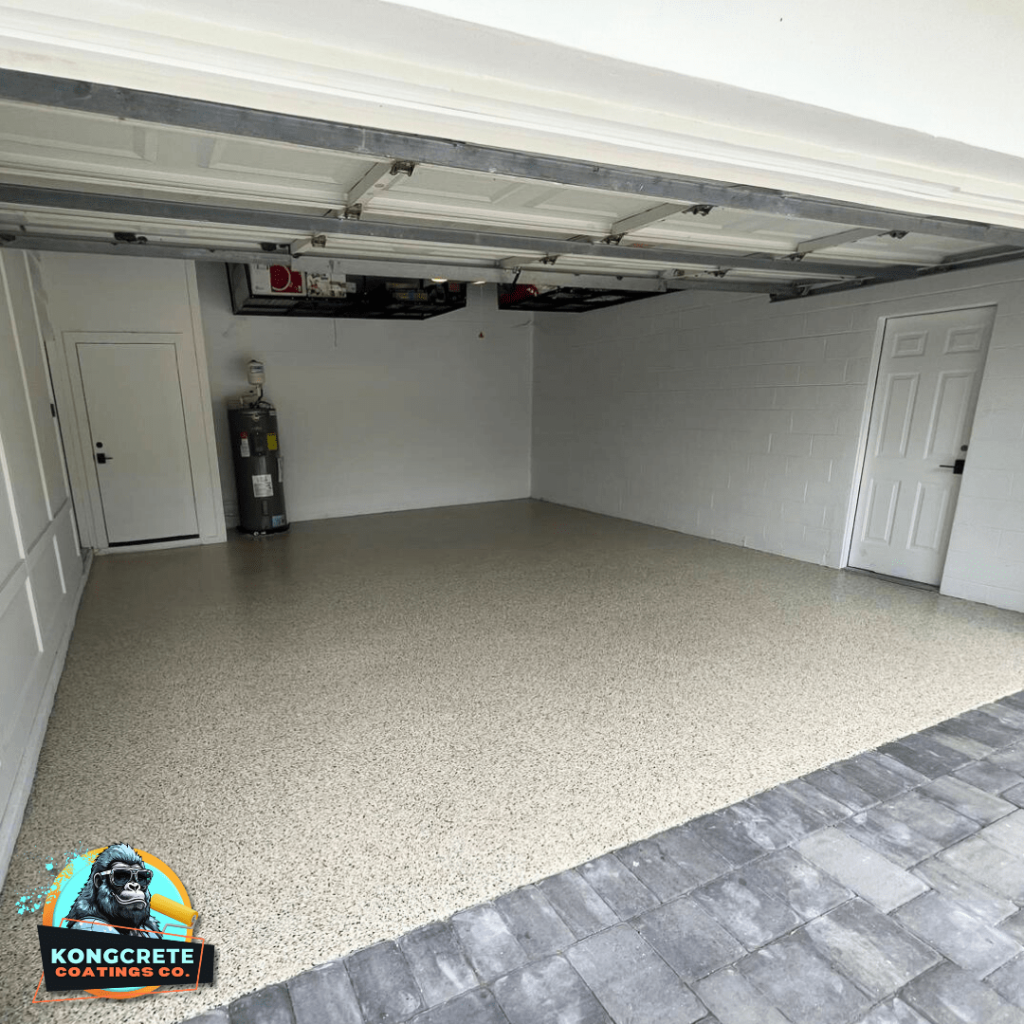
Garage floor coating odors in Orlando often last longer than expected, especially in attached garages where ventilation is limited. Strong fumes peak during and after installation, then fade gradually as airflow increases. Low-VOC and polyaspartic options can help reduce the discomfort window, but even with modern coatings, a faint smell may persist for up to two weeks. Choosing effective ventilation speeds up the process and makes return-to-use decisions clearer.
We help Orlando homeowners plan safe, comfortable timelines for walking, parking, and storing items after a professional epoxy floor coating.
How Long Do Epoxy Floor Coating Fumes Last in Orlando’s Climate?
Epoxy floor coating fumes in Orlando’s climate are most noticeable during application and the first one to two days that follow. Florida’s warmth and humidity can speed up the curing process, but the initial odor is still strong and may linger for several days. With steady ventilation, such as open garage doors and fans, about 80% of the smell usually fades by the third day. A faint odor might persist for up to two weeks, especially if the garage stays closed or airflow is limited.
Low-VOC and polyaspartic systems tend to produce less lingering odor than high-solvent options, but all coatings need time to fully off-gas before the space feels neutral again.
Planning the return to regular garage use requires more than simply waiting until the floor looks dry. Even as the coating protects against Florida’s heat and moisture, a little patience with airing out the space makes a big difference in comfort. Those considering a professional epoxy floor coating in Orlando will benefit from a realistic timeline that accounts for our climate. This ensures a safer, fresher result for every household.
Why Fumes Linger Longer in Attached Garages Than You Might Expect
Fumes from garage floor coatings can linger far longer in attached garages than most people expect, creating a unique set of challenges for families eager to reclaim their space.
- Attached garages share walls, ceilings, and sometimes even ductwork with the main house. This design traps odors inside and limits fresh air, making it harder for fumes to escape compared to a detached garage.
- The typical garage door in an attached garage is often kept closed for security or weather reasons. This reduces airflow, slowing the dissipation of solvent or chemical odors from an epoxy floor coating.
- Many attached garages in Orlando have few windows or vents. Without these, it is difficult to create cross-ventilation, so airborne particles and fumes build up rather than clearing out quickly.
- Air conditioning and central HVAC systems in the home can pull in garage air. If the garage is not well sealed off, these systems can circulate lingering odors into living areas, extending discomfort.
- Even after the coating looks dry, the enclosed environment of an attached garage allows low-level fumes to stick around. Planning extra ventilation time is necessary before returning to normal use, ensuring comfort for the entire household.
Difference Between Solvent-Borne and Low-VOC Garage Coating Odors
Two main types of garage floor coatings, solvent-borne and low-VOC, create different odor experiences after installation. Solvent-borne coatings use strong-smelling chemicals that can fill a garage with a sharp, lingering scent. This odor is more intense at first and can stick around for several days, especially in spaces with limited airflow. Low-VOC coatings, including many modern polyaspartic and advanced epoxy systems, are formulated to release fewer volatile organic compounds.
The result is a much milder odor that fades faster and is less overpowering. For households sensitive to chemical smells or planning a quick return to their garage, the difference between these systems can be significant. Choosing a low-VOC or polyaspartic floor coating has a practical benefit. The reduced odor helps families regain use of their garage sooner, with less disruption from harsh fumes. It also makes it easier to ventilate the space, as the lighter scent clears out more quickly with fans or open doors.
For homes in Orlando where high humidity and heat can make odors feel stronger, this difference can improve comfort and speed up the return-to-use schedule. Selecting the right coating system is an effective first step toward a smoother, more comfortable garage upgrade.
Day-By-Day Odor Timeline: What to Smell for the First Two Weeks
Knowing what to expect from garage floor coating odors helps set a realistic plan for reclaiming the space after installation.
- The strongest smell appears on the day of application and usually lasts through the next day. During this window, the odor is sharpest and most noticeable, especially if the garage is closed or ventilation is limited.
- By day three, a well-ventilated garage typically sees the odor drop by about 80%. Some faint chemical scent may linger, but most people find the air is much easier to tolerate with steady airflow. The scent continues to fade with each passing day, especially with doors open or fans running.
- A light odor can persist for up to two weeks, depending on weather, airflow, and the type of coating used. This final stage is less disruptive but may still be noticeable if the garage remains closed for long periods. Planning for gradual odor reduction makes it easier to schedule storage or household routines.
The Role of Humidity and Florida Heat in Garage Fume Dissipation
Florida heat and humidity can change how quickly garage coating odors fade, but their effects depend on the product, application conditions, and airflow. Warm temperatures may support curing for some coatings, while high humidity can slow or alter curing for others, so heat alone does not guarantee a shorter odor window.
Follow the coating manufacturer’s temperature and humidity limits, and ask the installer for the expected return-to-use schedule for the specific system.
Cross-ventilation is usually more useful than simply heating the garage. When conditions allow, open the garage door and another exterior opening, then use fans to move air outward and replace stagnant air with fresh air. Avoid directing fumes into the home, and keep the space closed to household traffic until the installer’s walk-on guidance is met. If the garage remains humid or poorly ventilated, expect the comfort window to be longer and rely on the installer’s instructions rather than a fixed Orlando-wide timeline.
Best Ventilation Strategies for Faster Odor Removal
Choosing the right ventilation strategies directly shapes how quickly garage coating odors clear out and how soon the space feels comfortable again.
- Cross-ventilation: Open the main garage door and a side or back door to create a clear path for airflow. Set up one or more box fans to pull air out of the garage, not toward the house. This method helps remove fumes faster than opening just one door or window.
- Use of low-VOC products: Many advanced epoxy and polyaspartic coatings now offer low or near-zero volatile organic compound (VOC) formulas. Most newer epoxies are almost 100% solids and release little to no VOCs, making ventilation easier and reducing lingering odors. Selecting these options shortens the time needed before the garage becomes comfortable for family use.
- Continuous airflow: Keep fans running for several days after installation, even if the initial odor seems to fade. Consistent air movement prevents fumes from settling and helps maintain a steady exchange with fresh outdoor air. This approach works especially well in Orlando’s climate, where heat and humidity can slow natural dissipation without active ventilation.
Open vs. Closed Garages: How Access and Airflow Affect Fume Duration
An open garage generally gives odors more opportunity to disperse than a closed garage, but opening one door may not create effective cross-ventilation. Air can remain stagnant when there is no opposing opening or when the airflow path is blocked. In an attached garage, keep air movement directed away from living areas, and avoid assuming that an open door alone has cleared the odor. One homeowner report described strong smells persisting despite leaving the garage doors open, while a forum participant suggested that insufficient curing between layers might have contributed.
That experience is not a universal timeline, but it shows why access and airflow do not guarantee rapid odor removal.
For an Orlando garage, use practical airflow and comfort checks rather than a fixed promise about when fumes will disappear. Provide openings on opposite sides when feasible, use fans to move air outward without blowing debris onto the coating, and follow the installer’s product-specific curing instructions. If the garage still smells strongly, feels poorly ventilated, or the coating remains within its stated cure period, postpone routine foot traffic, vehicle parking, and storage, especially in an attached space.
Extending ventilation and limiting access gives the coating more time to cure and reduces the chance that household use will interfere with the finish.
When Is It Safe for Your Family to Walk on Newly Coated Floors?
Deciding when it is safe for family members to walk on newly coated garage floors depends on several practical factors that go beyond just how the surface looks.
- The first step is to check the product-specific cure time given by the installer or manufacturer. Floors may look dry before they have finished releasing fumes, so walking on them too soon can disrupt the finish and prolong odor exposure.
- Another key factor is the strength of remaining odors in the garage. If strong chemical smells are still present, even with ventilation, it is best to delay foot traffic. Waiting until the odor is faint or barely noticeable helps ensure the space is more comfortable for everyone.
- Finally, continuous ventilation plays a major role. Keeping fans running and doors open until both the stated cure period is met and the space smells fresh makes a big difference. This approach helps families in Orlando return to normal routines without risking the quality of the new garage floor.
Timeline for Safely Parking Vehicles After Epoxy Floor Coating
When can you park a vehicle after an epoxy garage coating? Wait for the installer’s or manufacturer’s stated vehicle-traffic cure time, not merely until the surface feels dry. Vehicle weight, tire friction, turning, and parking in one spot place more stress on a curing film than ordinary foot traffic.
If the product instructions require several days, keep vehicles outside for that full period, and extend the wait if the coating remains noticeably soft, tacky, or strongly odorous.
Plan to keep the garage ventilated with appropriate airflow while the coating cures, but do not treat ventilation as a substitute for the specified cure schedule. Limited airflow can allow odors to linger, particularly with solvent-containing products, while low-odor or low-VOC formulas may be more comfortable sooner without necessarily being ready for vehicle loads. In Orlando, ask the installer to provide the product-specific return-to-use schedule for walking, parking, and storing belongings, then use the longest applicable wait time for your household’s plans.
Garage coating fumes in Orlando usually linger for several days, with the strongest odors during application and the first two days. About 80% of the smell clears by the third day with steady ventilation, while a faint odor can remain for up to two weeks, especially in attached garages. Cross-ventilation using open doors and fans helps odors dissipate faster, but enclosed spaces slow the process. Low-VOC and polyaspartic products produce less intense odors and make the space comfortable sooner.
Wait until both the installer’s recommended cure time and minimal odor are reached before regular use resumes. This approach helps households enjoy a safer and more comfortable transition after a professional epoxy floor coating in Orlando.