Several challenges threaten the life and appearance of concrete floor coatings in Florida’s harsh, wet climate. High humidity, strong sun, heavy wear, and frequent spills all test even the toughest systems.
This means you rely on key features like UV resistance and moisture protection to help coatings stay clean, bright, and strong over time.
Patios and garages face risks such as fading, cracking, chemical staining, unwanted mold, and coating failures caused by rushed preparation. Fast swings in heat and cold also put stress on each layer of the coating.
This is why we focus on preventing water damage as the first line of defense.
Moisture Intrusion and Concrete Coating Damage
Moisture intrusion is one of the most common causes of coating failure because water disrupts adhesion and damages the concrete base. This is especially important to understand when evaluating decorative concrete services in Orlando, where humidity levels stay high throughout the year.
Capillary Absorption: Water can travel upward through concrete by capillary action and create damp spots beneath coatings, even when the surface looks dry.
Trapped Water Vapor: If concrete is not fully dry before installation, vapor can build beneath the coating. This pressure causes blisters, peeling, or bubbling.
Adhesion Loss and Shrinkage: Water-based coatings may lose adhesion or thickness when exposed to moisture. This leads to weakened performance and early surface failure.
Polyurea Advantage: Polyurea coatings offer flexibility and fast curing that help resist moisture-related issues. Their stretch and rapid bond make them strong performers in humid environments.
UV Exposure Leading to Fading and Degradation
UV rays break down coating binders and pigments, which leads to fading, discoloration, and chalk residue. These risks grow higher on surfaces with direct sun exposure, such as patios, driveways, and garage floors.
Color Loss Over Time: Long-term UV exposure causes fading, especially on darker coatings that absorb more sunlight. This leads to dullness and reduced curb appeal.
Surface Breakdown and Chalking: When binders break down, the surface becomes powdery or chalky. This is more likely in coatings with high pigment loads and low binder ratios.
Polyaspartic Protection: Polyaspartic technology provides UV-resistant performance that helps maintain color and cut down on resurfacing needs. These coatings withstand Florida’s UV conditions far better than older formulas.
Cracking and Surface Erosion Risks
Cracking and erosion are common concerns for garage floor coatings and decorative concrete coatings. The Florida climate can make these issues more challenging without proper preparation and material selection.
Substrate Weakness: Existing cracks in concrete must be repaired before coating. If not, those cracks continue to spread under the surface.
Weather Impact: Rapid changes in heat or cold cause the slab to expand and contract. This makes cracks more likely to grow beneath coated surfaces.
Improper Surface Prep: Skipping proper grinding or profiling creates weak areas that cannot bond well. These spots may form bubbles or separate from the base.
Traffic Wear: Heavy vehicle and foot traffic gradually wear down the topcoat, especially if it lacks the proper thickness for long-term durability.
Mold and Mildew Growth on Coated Surfaces
Mold and mildew are persistent threats to concrete surfaces in Florida. Even coated surfaces can show growth when environmental conditions encourage it.
High Humidity and Shade: Shaded areas with trapped moisture accelerate mold and mildew growth, especially in places that stay damp.
Improper Drainage: Standing water near patios, garages, or driveways creates an ideal environment for spores to settle and stain the coating.
Inadequate Cleaning: Dust, pollen, and debris act as food sources for mold. Without routine cleaning, buildup forms beneath Florida’s warm, humid air.
Old or Worn Coatings: As coatings age, small pores form and allow moisture to settle. This creates pockets where mildew can grow.
Insufficient Airflow: Limited airflow prevents coated surfaces from drying properly after rain or washing, making moisture problems worse.
Inadequate Surface Preparation Before Coating Application
Incomplete or rushed surface preparation is one of the leading causes of concrete coating failure. Even the best materials cannot bond properly if the concrete surface is not ready.
Contaminants Prevent Bonding: Dust left behind after grinding or cleaning can weaken adhesion. Oils or residues form barriers that cause bubbling or peeling.
Surface Profile Determines Longevity: Proper texture helps polyaspartic floors and epoxy flooring in Orlando installations bond well. Too smooth or too rough a profile leads to cracking, peeling, or visible surface flaws.
Skipping Safety Steps Causes Delays: Poor safety practices during preparation lead to exposure risks and unplanned project delays. Without proper PPE, crews face hazards that disrupt timelines and surface results.
Temperature Fluctuations Affecting Coating Integrity
Temperature swings put significant stress on concrete coatings. The right application knowledge helps reduce these risks and maintain long-term performance.
Cure Time Disruption: Extreme heat or cold interferes with proper curing. When cure times shift, coatings may not form a strong bond with concrete.
Adhesion Breakdown: Fast temperature changes can weaken adhesion and increase the likelihood of peeling or blistering.
Coating Flex Issues: Coatings with little flexibility cannot handle expansion and contraction, which results in cracks or flaking.
Thickness Problems: Temperature inconsistencies during curing can create uneven thickness, reducing durability and resistance to wear.
Surface Moisture Traps: Cooler conditions cause moisture to settle in the slab, shortening the lifespan of even the strongest decorative concrete Orlando systems.
Chemical Spills and Staining on Decorative Concrete
Chemical spills and staining can threaten the long-term beauty of decorative concrete coatings, even though polyaspartic systems require care to prevent permanent discoloration.
Permanent Staining Risk: Gas, oil, and cleaners can create dark marks on coated surfaces. If spills sit too long, they penetrate deeper and become harder to remove.
Surface Degradation Over Time: Harsh chemicals slowly erode topcoats. Over time, the finish weakens and loses its protective qualities.
Weatherproofing as Added Protection: High-quality water sealers help block moisture and reduce penetration from spills. Added protection limits long-term staining and keeps the surface looking fresh.
Protecting your coated concrete surfaces from these threats helps extend their lifespan. Daily wear, moisture, UV exposure, and chemicals all impact how coatings perform in Florida homes and businesses.
When you choose advanced systems like polyaspartic floors and epoxy flooring Orlando installations, you gain stronger defense against peeling, fading, and stains. Regular sweeping and quick spill cleanup help maintain the surface and avoid serious damage.
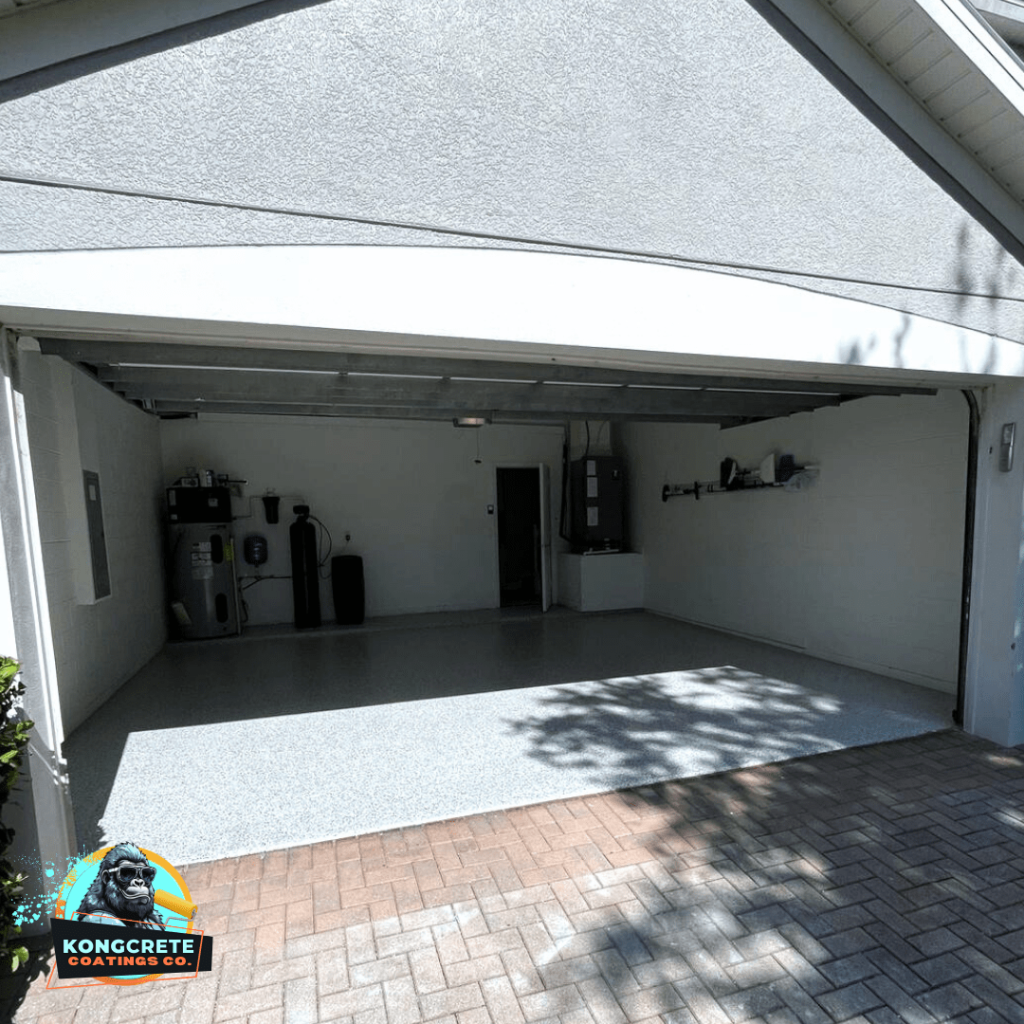
At Kongcrete Coatings, we focus on durable protection. Our garage floor coatings, patio and driveway coatings, and decorative concrete solutions help defend your surfaces year after year. This gives your home lasting value, clean curb appeal, and a protected concrete foundation.