When upgrading concrete surfaces in Orlando, homeowners and business owners usually face a choice between epoxy flooring and polyaspartic floors. Both solutions offer durable, attractive coatings, but they differ in material properties, installation processes, and long-term performance. Understanding these differences is crucial to making an informed decision that provides long-lasting protection, safety, and aesthetic appeal.
Florida properties present unique challenges. High humidity, heavy rainfall, intense UV exposure, and frequent traffic can all affect the lifespan of a coating. Choosing the right system ensures that your garage, patio, driveway, or commercial space performs reliably for years to come.
Understanding Epoxy Flooring
Epoxy flooring in Orlando is a widely used coating system composed of epoxy resins and hardeners that chemically bond to concrete surfaces. When installed correctly, epoxy creates a durable, glossy surface that resists stains, chemicals, and everyday wear.
Key characteristics of epoxy flooring include:
Durability and Strength: Epoxy forms a hard, rigid surface that withstands foot traffic, light machinery, and daily use.
Appearance Options: Epoxy can incorporate decorative flakes or metallic finishes to create visually appealing floors.
Maintenance Benefits: Properly installed epoxy coatings are easy to clean and resist staining from oils, chemicals, and dirt.
Despite these advantages, epoxy has limitations, especially in Florida conditions. Standard epoxy requires longer cure times, which can delay use of the space. It also has limited UV resistance, meaning outdoor applications can discolor or yellow over time. Epoxy is more susceptible to moisture-related adhesion problems if the surface is not prepared properly.
Understanding Polyaspartic Floors
Polyaspartic floors are a newer coating technology that shares some similarities with epoxy but offers distinct advantages, particularly in fast-paced or outdoor applications. Polyaspartic coatings are aliphatic polyurea systems designed for rapid curing and enhanced UV resistance.
Key benefits of polyaspartic floors include:
Rapid Cure Times: Polyaspartic coatings often cure in 2 to 3 hours, allowing homeowners or businesses to resume use quickly.
Superior UV and Moisture Resistance: These coatings maintain color and gloss outdoors while resisting moisture intrusion.
Durability for Heavy Traffic: Polyaspartic floors withstand heavy foot traffic, vehicles, and equipment without peeling or cracking.
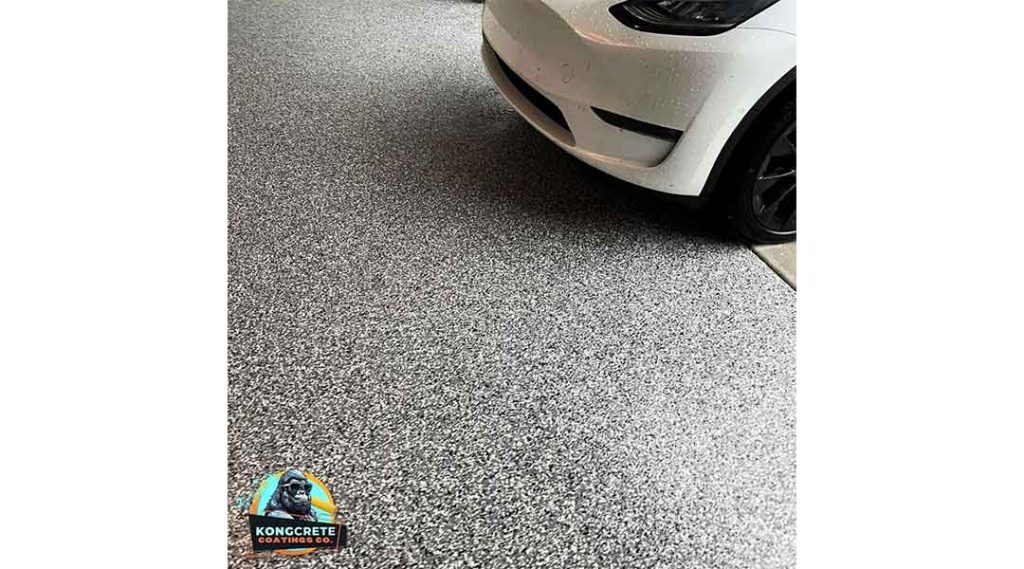
Polyaspartic systems can be customized with decorative flakes or textures, making them suitable for residential garages, patios, driveways, and commercial spaces. They also provide slip resistance, stain resistance, and easier maintenance compared to traditional epoxy, particularly in Florida’s climate.
Comparing Installation Processes
Installation differences between epoxy and polyaspartic floors are significant and affect both performance and convenience.
Epoxy Installation:
Requires meticulous surface preparation, including grinding, cleaning, and moisture testing
Typically includes a primer, base coat, decorative broadcast, and topcoat
Longer curing time, often 24–72 hours before full use
Sensitive to environmental factors such as temperature and humidity
Polyaspartic Installation:
Also requires thorough preparation but tolerates a wider range of surface and environmental conditions
May include base and topcoat layers with optional decorative broadcast
Cures rapidly, often allowing full use in 2–3 hours
Highly UV stable, reducing risk of discoloration outdoors
For property owners who need quick turnaround or plan to use outdoor spaces immediately, polyaspartic systems often provide a significant advantage.
Performance in Florida Conditions
Florida’s climate presents unique challenges for concrete coatings. Homeowners and business owners need a solution that resists moisture, UV damage, and heavy use.
Epoxy: Performs well indoors on properly prepared surfaces but may discolor or peel outdoors over time. Extended curing times can also delay project completion.
Polyaspartic: Designed to resist moisture and UV exposure, making it ideal for patios, driveways, lanais, and commercial outdoor spaces. Fast curing times reduce downtime for residential and commercial properties.
Both systems are durable, but polyaspartic floors often outperform epoxy in areas exposed to sunlight, rain, or high humidity.
Cost Considerations
Cost is an important factor in decision-making, but it should be weighed against long-term performance.
Epoxy Flooring: Typically has a lower initial material cost but longer installation and curing times may increase labor costs. Premature failure due to environmental factors can result in additional expenses.
Polyaspartic Floors: Higher upfront material cost but faster installation, longer lifespan, and resistance to UV and moisture often make polyaspartic systems more cost-effective over time.
Professional installation ensures that both systems achieve maximum longevity and performance, protecting your investment.
Maintenance and Longevity
Maintenance requirements differ slightly between the two systems:
Epoxy: Resistant to stains and chemicals indoors but requires careful cleaning to avoid scratches or damage. Outdoor epoxy surfaces may fade or discolor over time.
Polyaspartic: Easier to maintain and highly resistant to UV, moisture, and stains. Rapid curing and superior adhesion reduce the need for touch-ups or repairs.
Both coatings are designed to last many years with proper care, but polyaspartic coatings typically offer enhanced durability in Florida’s challenging environment.
Choosing the Right System
Deciding between epoxy and polyaspartic floors depends on the specific needs of your property:
Indoor Residential Garages: Epoxy provides strong, attractive protection, particularly for areas shielded from sunlight and moisture.
Outdoor Spaces: Polyaspartic coatings are often better for patios, driveways, and lanais due to UV and moisture resistance.
Commercial Properties: Polyaspartic’s rapid cure and high durability are ideal for warehouses, auto shops, and showrooms.
Time Constraints: Polyaspartic floors allow faster turnaround for projects that need minimal downtime.
Working with a professional contractor ensures that the selected system matches the property’s specific conditions, traffic levels, and aesthetic goals.
Partnering With Experts
For property owners searching for “epoxy companies near me,” working with experienced professionals guarantees proper surface preparation, material selection, and installation. At Kongcrete Coatings, we specialize in garage floor coatings, patio and driveway coatings, and commercial epoxy and polyaspartic flooring designed specifically for Florida homes and businesses.
Our team provides:
– Expert surface preparation and moisture testing
– Polyaspartic and epoxy systems tailored to environmental conditions
– Decorative options, slip resistance, and easy maintenance
– Warranty coverage to protect your investment
By choosing a qualified contractor, homeowners and business owners can enjoy concrete coatings that are durable, attractive, and built to withstand Florida’s climate. Proper installation maximizes lifespan, enhances safety, and provides a surface that is easy to maintain and enjoy for years.
Both epoxy flooring in Orlando and polyaspartic floors have distinct benefits. Epoxy remains a strong choice for indoor areas and aesthetic projects, while polyaspartic coatings offer faster cure times, UV stability, and superior performance for outdoor and high-traffic applications. The right choice depends on your property’s needs, environmental conditions, and long-term goals.
Partnering with experienced professionals ensures that your investment delivers maximum value, durability, and functionality. Whether you choose epoxy or polyaspartic systems, proper installation by a trusted contractor is the key to achieving high-quality, long-lasting concrete surfaces.