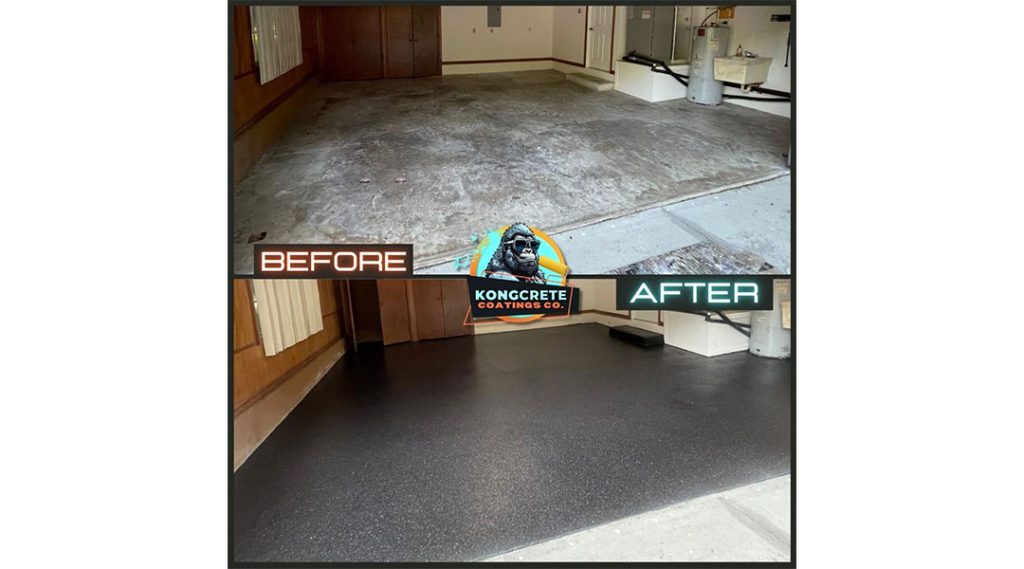
Garage floor coatings must withstand Florida’s heat, humidity, vehicle traffic, and daily wear. When installed correctly, they protect concrete from moisture intrusion, stains, and structural damage. However, when shortcuts are taken, coating systems fail far sooner than expected.
Many homeowners experience peeling, bubbling, fading, or surface breakdown within just a few years. In most cases, the problem is not the concept of coating the floor. It is how the system was installed, what materials were used, and whether Florida’s environmental conditions were properly considered.
As specialists in garage floor coatings in Orlando, we regularly evaluate failed systems that could have been avoided with proper preparation and material selection. The most common issues begin before the first layer is even applied.
Neglecting Proper Surface Preparation
Surface preparation is the foundation of any successful garage floor epoxy installation. Without it, no coating can bond correctly.
Industry research consistently shows that a majority of coating failures originate from improper preparation. Skipping mechanical grinding, relying only on acid etching, or failing to remove embedded contaminants weakens adhesion from the start.
Concrete behaves like a porous sponge. Oil stains, moisture, and tire residues penetrate below the visible surface. If these contaminants remain trapped, the coating cannot anchor properly to the slab.
Diamond grinding is essential because it:
Opens concrete pores for mechanical bonding.
Removes embedded oils and surface contaminants.
Creates the correct surface profile for long-term adhesion.
Eliminates weak laitance layers on older slabs.
Acid washing alone does not provide the same bonding profile. It does not remove deep contaminants or create a consistent surface texture.
When preparation is rushed or incomplete, peeling often begins within months. Hollow spots develop beneath the coating, and sections may lift entirely under tire pressure.
Proper preparation is not optional. It is the difference between long-term durability and early failure.
Overlooking Moisture Issues in Concrete
Moisture is one of the most underestimated threats to garage coatings in Central Florida.
Concrete slabs continuously transmit vapor from the ground upward. Even when surfaces appear dry, internal moisture movement may still be active. When coatings trap that vapor, pressure builds beneath the surface.
This pressure leads to blistering, bubbling, and delamination.
Common moisture-related failures include:
- Vapor bubbles are forming beneath the coating layer.
- Edge lifting near expansion joints.
- Surface peeling after heavy rains.
- Coating separation under hot tire areas.
Without proper testing and mitigation, moisture-related delamination rates increase dramatically in humid climates.
Moisture barriers and appropriate primers must be selected based on the slab condition. Ignoring this step shortens the lifespan of even high-quality systems.
Applying Coatings in Unfavorable Conditions
Environmental conditions during installation directly impact performance.
Humidity levels above recommended thresholds interfere with chemical reactions during curing. Surface temperatures that are too low or too high affect resin flow and bond formation.
In Orlando, afternoon storms and sudden humidity spikes create unpredictable installation environments. Applying coatings during improper conditions increases the likelihood of:
- Soft curing or tacky surfaces.
- Cloudy or uneven finishes.
- Reduced bond strength.
- Premature peeling.
Professional installation requires monitoring ambient temperature, slab temperature, and relative humidity before and during application.
Skipping environmental checks leads to costly corrections later.
Using Low-Quality Epoxy Products
Not all garage floor epoxy systems are equal.
Many consumer-grade kits contain low-solid-content formulations. These products create thin films that cannot withstand heavy vehicle use or Florida’s thermal expansion cycles.
Low-quality materials often result in:
- Peeling within one to two years.
- Hot tire pickup where coatings lift under heated tires.
- Discoloration from UV exposure.
- Reduced chemical resistance against oil and brake fluid.
Budget products may seem cost-effective initially, but they frequently require full replacement within five to seven years.
Professional-grade systems use higher solid content resins that build thicker protective layers and provide better mechanical strength.
Material selection directly impacts lifespan.
Skipping Necessary Primer Application
Primers play a critical structural role in coating systems.
Without a primer, the topcoat cannot fully penetrate and anchor to the slab. This weak bond increases vulnerability to moisture and thermal stress.
Research indicates that a significant portion of early peeling issues trace back to improper or skipped priming.
Benefits of proper priming include:
- Enhanced adhesion between the slab and the coating.
- Improved resistance to hot tire pickup.
- Reduced risk of moisture vapor intrusion.
- Increased long-term stability.
In humid climates like Central Florida, primers also act as moisture buffers that stabilize the substrate before the topcoat is applied.
Skipping this layer significantly increases failure risk.
Incorrectly Mixing Epoxy Components
Even high-quality materials can fail if mixed incorrectly.
Garage floor epoxy systems rely on precise ratios between resin and hardener. Improper measurement or incomplete mixing disrupts the chemical reaction required for full curing.
Common mixing errors lead to:
- Soft or sticky surface areas.
- Brittle sections are prone to cracking.
- Surface bubbles and pinholes.
- Uneven gloss and texture.
- Failure to observe induction times or exceeding pot life further compromises performance.
Professional installers use calibrated measurement systems and follow manufacturer specifications exactly. Chemical accuracy matters.
Failing to Allow Adequate Curing Time
Curing time directly affects durability.
Walking or driving on coatings before full cure weakens the bond and increases the likelihood of surface damage. While some systems cure faster than others, each layer requires adequate time to stabilize.
Typical issues from rushed curing include:
- Tire imprints.
- Surface scuffing.
- Early peeling at edges.
- Microfractures caused by slab movement.
Florida’s humidity can extend cure times for traditional epoxy systems. Ignoring this factor results in hidden structural weaknesses that appear later.
Proper curing ensures maximum bond strength and long-term performance.
Temperature Fluctuations and Slab Movement
Concrete expands and contracts with temperature shifts. Standard epoxy systems are rigid and less tolerant of slab movement.
In Florida garages, temperatures fluctuate daily between cool mornings and hot afternoons. This expansion and contraction cycle stresses coating bonds.
When coatings lack flexibility, stress fractures develop beneath the surface. Over time, these fractures become visible cracks or peeling zones.
Flexible high-performance systems adapt better to thermal movement and reduce stress failure risk.
Why Professional Installation Prevents Failures
Most garage coating failures share a common theme: improper installation methods combined with unsuitable materials.
Professional installation includes:
- Detailed moisture testing.
- Mechanical surface preparation.
- Climate-controlled application conditions.
- Correct resin mixing and timing.
- Proper primer and topcoat layering.
- Skipping any one of these steps increases risk.
At Kongcrete Coatings, we follow a systematic installation process designed specifically for Florida conditions. Our systems are engineered to withstand humidity, UV exposure, vehicle traffic, and temperature swings.
When coatings are installed correctly, they provide long-term protection rather than becoming short-term repairs.
Protect Your Investment with Proper Methods
Improper garage floor coatings lead to peeling, bubbling, fading, and structural damage. In many cases, these failures are preventable.
Choosing low-grade products, skipping preparation steps, ignoring moisture testing, or rushing cure times creates vulnerabilities that surface later.
With professional garage floor coatings in Orlando, installed using proper surface preparation and high-performance materials, your floor maintains its appearance and structural integrity for years.
At Kongcrete Coatings, we prioritize correct preparation, premium materials, and climate-aware installation methods. Our systems are backed by the HomeLife Warranty and designed to perform in Central Florida’s demanding environment.
When installed correctly, your garage floor becomes an asset rather than a recurring repair expense.