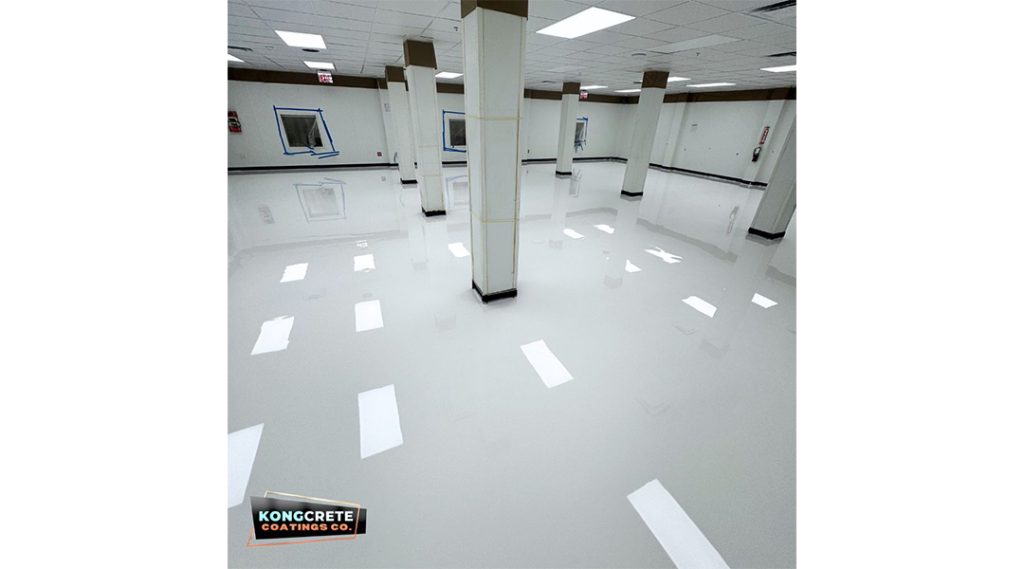
Selecting the right warehouse floor coating directly affects how efficiently your operation runs, how safely your team moves, and how well you control long-term costs. When comparing commercial epoxy flooring in Orlando to polyaspartic systems, the differences become clear under real warehouse conditions.
Key decision factors include installation speed, UV resistance, maintenance demands, chemical durability, and overall system lifespan, especially in humid Central Florida environments. By comparing these features side-by-side for warehouse floor coatings used across Orlando, Windermere, and Clermont, we identify which system delivers a stronger return on investment for high-traffic facilities.
We start by examining how installation speed impacts operational timelines and long-term cost control.
Polyaspartic Coatings: Rapid Installation Benefits
Polyaspartic coatings deliver measurable ROI through faster installation timelines. In warehouse environments, downtime directly impacts productivity, scheduling, and workflow continuity.
Polyaspartic systems cure and become walkable in as little as 2–3 hours. This allows facilities to return to service on the same day under typical Florida conditions. By comparison, traditional systems often require multiple curing stages, extending downtime across several days.
This faster turnaround reduces exposure to environmental risks during installation, including humidity spikes and dust contamination. It also allows teams to resume operations sooner without extended shutdown periods.
Polyaspartic systems also maintain stability under UV exposure, which is important for loading docks and areas exposed to sunlight. This protects surface appearance and reduces the need for corrective work over time.
For warehouse operators evaluating concrete floor coatings, installation speed plays a direct role in operational continuity and cost efficiency.
Epoxy Flooring: Cost-Effective Durability
Epoxy flooring remains a widely used solution for warehouse floor coatings due to its lower upfront cost and established performance in controlled environments. Many facilities consider commercial epoxy flooring in Orlando because it offers a balance between affordability and baseline durability.
Lower Initial Investment: Epoxy systems typically cost less to install across large warehouse surfaces, making them a practical choice for budget-sensitive projects.
Structural Strength: Epoxy provides a rigid surface that withstands heavy equipment such as forklifts and pallet jacks under consistent use.
Surface Protection: Properly installed epoxy resists oil, grease, and common industrial spills, helping maintain a clean working surface.
Predictable Performance: With correct preparation and controlled conditions, epoxy systems can deliver stable performance for several years before requiring updates.
However, epoxy systems are more sensitive to environmental factors such as humidity and UV exposure. In Florida conditions, these factors can affect long-term durability and visual consistency.
For warehouse operators, epoxy can serve as a functional solution, but understanding its limitations is essential when comparing long-term ROI.
UV Resistance: Polyaspartic vs. Epoxy
UV exposure is a critical factor in warehouse environments where sunlight enters through loading docks, skylights, or open bay doors. Over time, UV exposure impacts both appearance and surface integrity.
Epoxy flooring systems tend to lose gloss and shift in color when exposed to consistent sunlight. This can affect the overall presentation of a facility and require maintenance to restore appearance.
Polyaspartic floors are formulated with UV-stable properties that maintain color consistency even under extended exposure. This stability supports long-term visual performance and reduces the need for surface corrections.
In warehouses across Orlando and the surrounding areas, UV resistance contributes directly to maintaining a professional and consistent environment over time.
Maintenance Needs: Comparing Coating Systems
Maintenance requirements influence both operational efficiency and long-term cost control. Warehouse floor coatings must support regular cleaning while resisting wear from daily activity.
Cleaning Efficiency: Polyaspartic floors create a dense surface that allows for faster cleaning compared to traditional coatings.
Stain Resistance: Both systems resist common industrial stains, but polyaspartic coatings maintain surface clarity longer under repeated exposure.
Repair Frequency: Epoxy systems may require more frequent touch-ups in high-traffic areas, while polyaspartic floors retain their finish with less intervention.
Moisture Handling: Polyaspartic coatings perform more consistently during cleaning cycles where water exposure is common.
We also integrate slip-resistant textures into our systems. This supports safer movement across warehouse environments where water, dust, and debris are present.
Reduced maintenance demands contribute directly to stronger ROI by minimizing labor time and operational interruptions.
Chemical Resistance: Essential for Warehouses
Warehouse environments expose floors to a wide range of chemicals, including oils, solvents, and cleaning agents. Without proper protection, these substances can degrade surfaces and lead to long-term damage.
Concrete floor coatings act as a barrier that prevents absorption and surface breakdown. Epoxy systems provide a sealed surface that allows many substances to be cleaned without permanent staining.
Polyaspartic floors extend this protection by maintaining chemical resistance while also delivering faster cure times. This allows surfaces to return to service quickly after installation or repair.
For facilities handling chemicals regularly, selecting the right coating system helps maintain surface integrity while reducing cleanup time and repair needs.
Longevity: Polyaspartic Coatings’ Advantage
Long-term durability plays a central role in ROI for warehouse floor coatings. Systems that maintain performance under continuous use reduce replacement cycles and associated costs.
Fast Cure Protection: Polyaspartic floors reach full cure quickly, reducing the risk of early-stage damage during installation.
Abrasion Resistance: These systems maintain surface integrity under heavy equipment and constant traffic.
Chemical Stability: Polyaspartic coatings resist degradation from repeated exposure to industrial substances.
UV Durability: The system maintains a consistent appearance in sun-exposed areas without rapid deterioration.
By maintaining performance across these factors, polyaspartic systems reduce the need for frequent repairs or reinstallation, supporting stronger long-term value.
Orlando’s Commercial Flooring Applications
Warehouse operators in Orlando require flooring systems that perform consistently under high humidity, temperature fluctuations, and heavy usage. Both epoxy and polyaspartic coatings are used across commercial environments, but their performance varies depending on the application.
Commercial epoxy flooring is often used in controlled interior spaces where UV exposure is limited. It provides a durable surface for warehouses, storage areas, and industrial environments.
Polyaspartic systems are applied in areas requiring faster turnaround and higher resistance to environmental stress. This includes loading docks, high-traffic zones, and spaces exposed to temperature and moisture variation.
We also apply decorative concrete coatings where visual consistency is required alongside durability. While warehouse flooring is primarily performance-driven, appearance still plays a role in maintaining professional standards.
Our experience across Orlando and the surrounding suburbs allows us to match the right system to each facility’s operational needs.
ROI Considerations for Warehouse Floor Coatings
ROI for warehouse floor coatings is influenced by installation efficiency, maintenance demands, durability, and lifecycle cost.
Operational Downtime: Faster installation reduces lost productivity and keeps operations running on schedule.
Maintenance Costs: Systems requiring less upkeep reduce labor time and ongoing expenses.
Durability Under Load: Coatings that resist wear and chemical exposure extend service life.
Lifecycle Value: Longer-lasting systems reduce replacement frequency and associated costs.
Polyaspartic systems are designed to address the primary causes of coating failure in Florida, including moisture intrusion and UV exposure. This reduces the likelihood of early repairs and supports long-term cost control.
Choosing between epoxy and polyaspartic systems depends on your facility’s priorities, including budget, usage intensity, and environmental conditions.
Conclusion: Selecting the Right System for Long-Term Value
Choosing the right warehouse floor coating requires balancing upfront cost with long-term performance. While epoxy flooring provides a cost-effective starting point, polyaspartic floors deliver stronger durability, faster installation, and improved resistance to Florida’s environmental conditions.
At Kongcrete Coatings, we install warehouse floor coatings and commercial epoxy flooring in Orlando designed for high-performance environments. Our process includes moisture mitigation, surface preparation, and system selection based on real-world conditions across Windermere, Clermont, and surrounding areas.
Our systems are also backed by our HomeLife Warranty, supporting long-term durability and consistent performance.
If you are evaluating warehouse floor coatings or planning a facility upgrade, contact our team today to request a quote and determine the right system for your operation.