For an Orlando garage-floor coating, surface preparation is a critical part of the installation, not a detail to overlook after choosing epoxy or polyaspartic materials. Cleaning, mechanical profiling, repairs, moisture checks, and suitable application conditions all help determine whether the coating can bond properly and perform as intended.
Homeowners comparing quotes should ask exactly which preparation steps are included, how unsuitable conditions will be handled, and what documentation or warranty terms apply. This guide explains what thorough preparation involves, why it matters for local projects, and how to identify a rushed installation plan before work begins.
The Crucial Role of Surface Prep in Epoxy Floor Orlando Results
Surface preparation is the foundation of a successful for epoxy flooring installation in Orlando. Whether you want an attractive finish or long-term durability, proper preparation helps create the conditions needed for your epoxy or polyaspartic system to perform as intended.
Surface preparation removes dirt, oils, and old coatings that can interfere with adhesion, helping the new coating bond properly to the concrete.
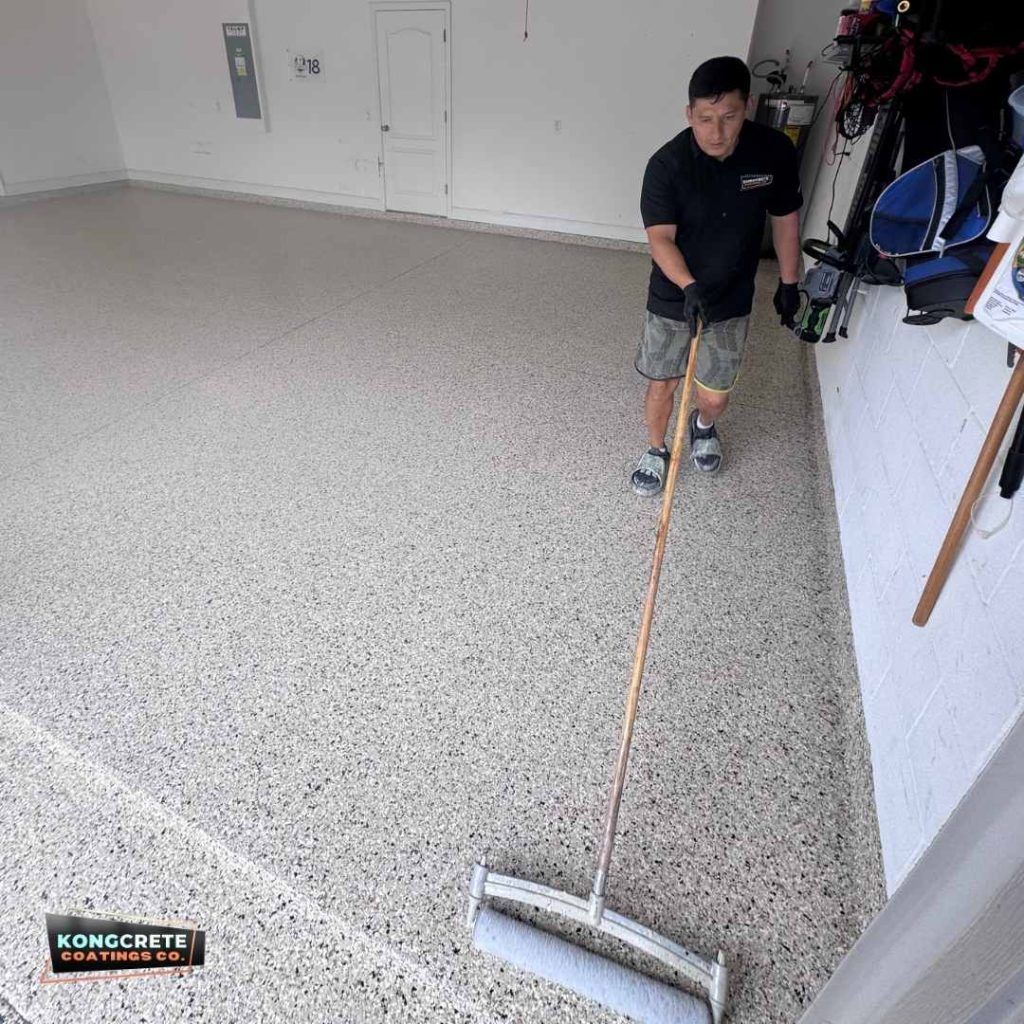
Concrete grinding creates a suitable surface profile so residential polyaspartic flake coatings can form a mechanical bond with the prepared slab.
Professional surface evaluation allows us to identify cracks, damaged areas, and other concerns before applying any product.
Appropriate moisture testing helps determine whether the slab meets the coating manufacturer’s requirements and whether additional mitigation is needed to reduce the risk of bubbling or peeling.
Preparing concrete according to product specifications and site conditions helps reduce problems associated with moisture, temperature, and humidity during installation.
Inadequate preparation can increase the risk of chipping, discoloration, hot tire pickup, and other coating problems, even when quality materials are used. If you are investing in a residential garage floor coating, attention to each preparation step is essential before installation begins.
Why Concrete Grinding Outperforms Acid-Etching in Humid Climates
Concrete grinding provides a controlled way to prepare concrete for coating adhesion. Unlike acid-etching, which can produce inconsistent results depending on the concrete and application conditions, mechanical grinding allows our team to prepare the surface according to the selected coating system’s requirements.
Better Bond Strength: Grinding creates a suitable surface texture that helps coatings mechanically bond with the prepared concrete, reducing the risk of adhesion problems when the system is installed correctly.
Removes Existing Coatings and Surface Contaminants: Mechanical preparation can remove unsuitable existing coatings and expose the concrete for evaluation. Oil, grease, and other contaminants may require additional treatment because grinding alone does not eliminate every type of contamination.
Controls Surface Profile: We select the preparation method and target surface profile according to the coating manufacturer’s requirements. Appropriate profiling helps create consistent conditions for applying a residential polyaspartic flake system.
Supports Condition-Specific Preparation: Grinding helps prepare the surface, but it does not correct excessive moisture within the slab. Moisture testing and any required mitigation must be addressed separately before installation proceeds.
Avoids Acid-Etching Residue Risks: Mechanical preparation avoids the need for acid-etching chemicals and their associated neutralization and residue concerns. Thorough dust removal and inspection are still necessary before applying a coating.
Moisture Testing: Protecting Against Orlando’s Water Table Challenges
Moisture testing is an important part of garage floor coating preparation throughout Orlando. Seasonal rainfall, drainage conditions, and moisture beneath a slab can affect the concrete, although the level of risk varies from one property to another.
If the slab’s moisture condition exceeds the selected coating system’s limits, the finished surface may develop bubbles, blisters, or peeling. Appropriate testing, such as calcium chloride testing or in-situ relative humidity testing where suitable, helps establish whether the concrete meets the product requirements before an epoxy floor coating is installed.
A reliable assessment provides information about moisture conditions that cannot be determined from appearance alone. Without appropriate testing, homeowners may not know whether additional preparation or a compatible moisture-mitigation system is needed.
We assess moisture conditions as part of the preparation process so potential concerns can be identified before coating application. This helps us determine whether the proposed system is suitable for the slab and whether additional mitigation should be considered.
Surface preparation should account for each property’s conditions, including drainage, visible dampness, previous moisture issues, and the characteristics of the concrete. Homes in low-lying areas or near lakes may warrant closer attention when site conditions indicate a potential moisture concern, but location alone does not establish whether a slab needs a barrier.
Investing in appropriate moisture assessment before applying decorative flakes helps homeowners make informed decisions about preparation, materials, and the steps needed to support long-term coating performance.
How Surface Profile Standards Prevent Peeling and Hot Tire Pickup
Surface profile standards help define the texture required on concrete before a coating is applied. Following the selected system’s preparation requirements helps support adhesion and reduces the risk of problems associated with an unsuitable surface.
Defines the Required Texture: A surface profile specification identifies the texture needed for a particular coating system. If the concrete is too smooth or otherwise unsuitable, the coating may not bond as intended and could be more vulnerable to peeling or hot tire pickup.
Promotes Consistent Bonding Across the Floor: By preparing the concrete to the appropriate Concrete Surface Profile (CSP), contractors create more consistent conditions across the areas being coated. The required profile depends on the product and its application specifications.
Uneven preparation can create areas where adhesion is less reliable. Inspecting the surface before application helps identify spots that need further attention.
Helps Reduce Hot Tire Pickup Risks: Hot tires can place additional demands on a garage floor coating, particularly when vehicles are parked on the surface after driving. Inadequate preparation, improper curing, or incompatible materials can contribute to coating pickup.
Meeting the required surface profile is one part of a complete installation process. Product selection, application conditions, and curing requirements also affect how the finished polyaspartic flake system performs over time.
The Impact of Orlando’s Weather on Coating Adhesion and Durability
Weather conditions should be part of the surface-preparation plan for any Orlando garage-floor coating project. Before applying a coating, our team should confirm that the concrete is properly prepared and follow the product’s requirements for slab temperature, air temperature, humidity, and ventilation.
Rain or excessive moisture can interfere with preparation and application, so the schedule may need to change when conditions fall outside the manufacturer’s specified limits. A careful installation plan should also account for moisture-test results, the preparation method, and changing conditions before and during application.
Homeowners comparing polyaspartic flake systems should ask what preparation is included rather than judging an estimate by material features alone. Clarify whether cleaning, mechanical profiling, repairs, moisture testing, and a final inspection are included, and ask how unsuitable conditions will be handled.
These questions help distinguish a complete installation plan from a rushed application without assuming that one coating type or installation schedule is appropriate for every garage.
Identifying Contractor Shortcuts That Sabotage Your Garage Floor
There are several common contractor shortcuts that can compromise the durability and appearance of a residential garage floor.
Skipping Mechanical Profiling: Some contractors may rely on limited cleaning or acid-etching instead of preparing the surface according to the coating manufacturer’s requirements. Inadequate profiling can compromise adhesion and increase the risk of peeling or lifting.
A professional installation should include an appropriate mechanical preparation method when required by the selected coating system, followed by thorough dust removal and a surface inspection.
Ignoring Moisture Testing: Applying a coating without evaluating moisture conditions can leave potential problems undiscovered. Concrete may retain moisture even when the surface looks dry, so the appropriate testing method and acceptance criteria should be established before installation.
Failing to address excessive moisture can contribute to bubbling, pinholing, or adhesion failure. We evaluate the slab’s condition and determine whether additional mitigation is necessary before proceeding.
Rushing Site Conditions: Installations that proceed despite unsuitable temperatures, humidity, or surface conditions can compromise application and curing. Contractors should follow the product’s requirements rather than rushing through preparation to meet a schedule.
Ask how environmental conditions will be checked, what happens if they fall outside the recommended limits, and which quality-control steps are completed before the coating is applied. Residential garage floors deserve a preparation plan that accounts for both the concrete and the conditions during installation.
The Real Cost of Skipping Proper Floor Preparation
Skipping proper floor preparation before applying a garage floor coating in Orlando can lead to expensive problems. Without appropriate mechanical profiling and moisture evaluation, coatings may lift or peel after installation, potentially requiring repairs or complete removal and replacement.
Poor preparation can also contribute to bubbles, pinholes, and adhesion defects. The likelihood and timing of these problems depend on the slab, the materials, the application process, and the conditions during curing. Warranty coverage varies, so homeowners should review the actual terms rather than assume that every preparation issue automatically voids coverage.
The labor saved by rushing installation may be outweighed by the cost of correcting a failed coating. Repairs can involve removing vehicles and stored items, preparing the affected surface again, and allowing additional time for application and curing.
Unplanned downtime can disrupt household routines, while repeated repairs can frustrate homeowners who expected a durable garage floor.
There is no substitute for appropriate preparation when coating performance depends on the condition of the concrete beneath a residential polyaspartic flake system. Identifying concerns before installation helps reduce avoidable risks and supports a more informed investment.
Essential Prep Steps Every Epoxy Floor Orlando Project Needs
Properly preparing for a garage floor coating installation involves several important steps that help the selected system bond to the concrete and perform as intended.
Concrete Grinding: Mechanical grinding removes unsuitable existing coatings and prepares the surface to the profile required by the selected system. The method should account for the concrete’s condition and the product specifications.
Thorough Cleaning: Dust, oil, grease, and other contaminants must be addressed before application. Appropriate vacuuming and cleaning methods help prevent residue or loose particles from interfering with adhesion.
Moisture Testing: Suitable testing helps establish whether the slab meets the coating manufacturer’s moisture requirements. If the results fall outside those limits, additional evaluation or a compatible mitigation system may be needed.
Surface Repairs: Cracks, holes, and damaged areas should be assessed and repaired where appropriate using compatible materials. Proper repairs help create a consistent surface for the planned flake finish.
Environmental Controls: Check slab temperature, air temperature, humidity, and other conditions specified by the manufacturer. These requirements should be followed during preparation, application, and curing.
Warning Signs of Inadequate Prep Before Coating Begins
Signs of inadequate preparation may be visible before any coating is applied. Dirt, dust, or oil stains left on the surface after cleaning can indicate that additional work is needed. Unfilled cracks, untreated damaged areas, or poorly completed repairs may also point to gaps in the preparation process.
Concrete that remains too smooth or does not meet the selected product’s surface-profile requirements may not provide suitable conditions for an epoxy or polyaspartic system. Unexplained damp spots can indicate a moisture concern that should be investigated before coating begins.
Visible dust or residue may also signal incomplete cleaning. Contractors should explain the preparation method and demonstrate that the surface meets the product requirements. They should also check temperature and humidity conditions before application rather than relying on assumptions about the weather.
A trustworthy installation team should explain the preparation steps and address any concerns before applying the coating. Homeowners should be able to ask questions about the process and understand how the concrete was evaluated.
A rushed project in which contractors begin mixing materials before confirming that preparation is complete is another warning sign. Proper preparation takes time, and the amount required depends on the garage’s size, concrete condition, repairs, and selected coating system.
Ask whether moisture testing has been completed when required, whether the concrete meets the product’s specifications, and whether any unresolved conditions could affect adhesion. Addressing these questions before installation helps reduce the risk of problems appearing after the decorative flakes are applied.
For a residential garage floor coating project, treat surface preparation as a core part of the installation, not an optional extra. When comparing contractors, ask whether the quote includes cleaning, mechanical profiling, repairs, moisture checks, environmental-condition monitoring, and a final inspection.
Request that the preparation method and warranty requirements be explained in writing before work begins. A detailed preparation plan makes it easier to compare quotes and avoid choosing an installation based only on the coating material or appearance.