
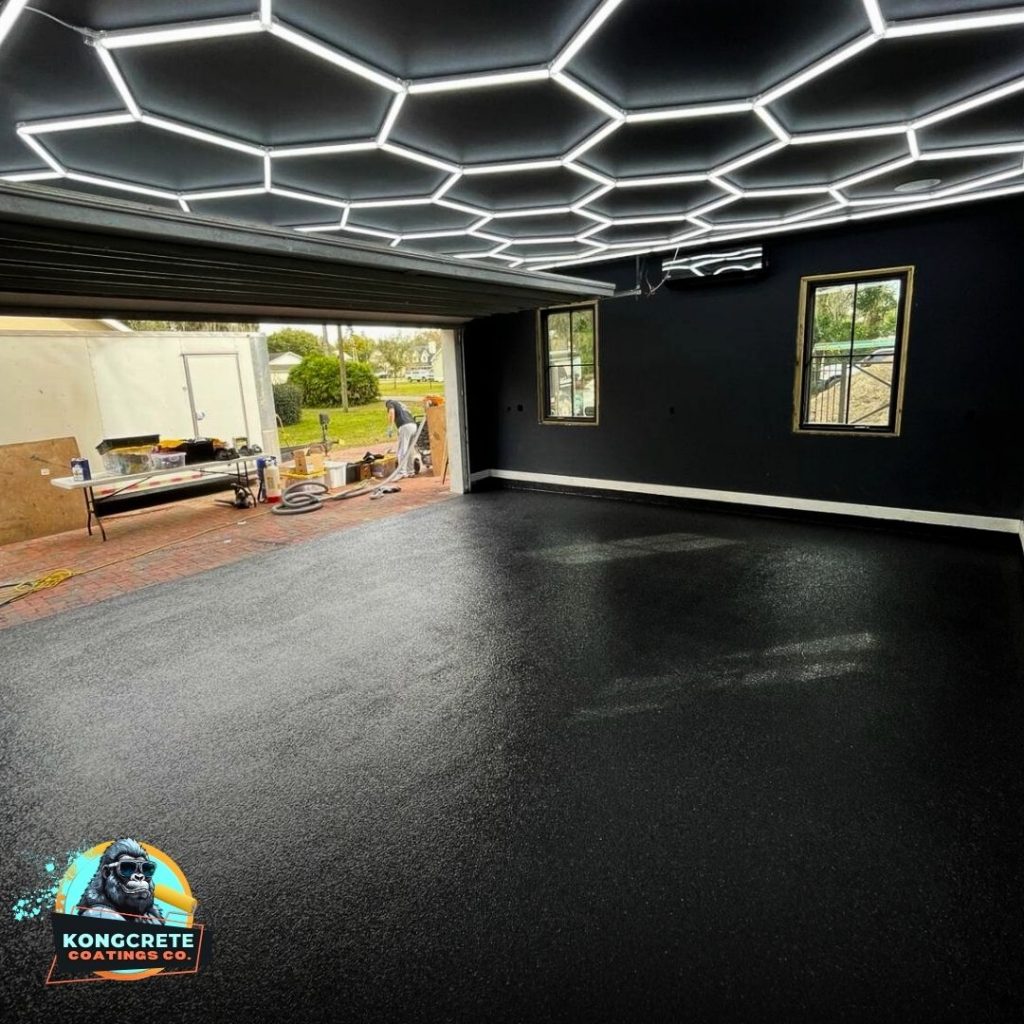
Cloudy, hazy, or weak patches on a new garage floor often trace back to invisible moisture or a chemical reaction during installation, not to long-term wear. In Central Florida, a slab that sits within 5°F of the dew point can develop a thin, undetectable moisture film, while humid, cooler conditions trigger amine blush, a waxy residue that blocks proper bonding.
At Kongcrete Coatings, we emphasize strict start-time checks and surface testing so every Orlando garage floor coating resists these hidden risks and delivers lasting quality.
What Causes Cloudy or Hazy Patches on Epoxy Garage Floors?
Cloudy, hazy, or milky patches on an epoxy garage floor can result from application conditions rather than a problem that developed weeks later. If a shaded concrete slab is close to the dew point, a nearly invisible moisture film can form before coating begins and weaken the bond. Cool, humid conditions can also contribute to amine blush, a waxy or greasy residue associated with some epoxy systems that may interfere with adhesion between coats. These defects can resemble moisture-related blistering, but the causes and repairs differ, so the installer should assess the surface and coating system before recoating.
Ask the installer whether the slab temperature was measured against the dew point before application, whether humidity was checked, and how the crew would remove amine blush before applying another epoxy coat. A commonly used precaution is to keep the slab surface about 5°F above the dew point, while following the coating manufacturer’s limits for humidity and temperature. In Orlando and across Central Florida, a damp morning or shaded slab can make start time and surface readings important quality checks.
Kongcrete Coatings can explain these checks when discussing epoxy garage floor coatings or a polyaspartic garage floor coating Orlando project.
The Dew Point Rule: Protecting Against Hidden Moisture
Hidden moisture is a leading cause of weak or cloudy patches on garage floor coatings, so understanding how to prevent it is essential.
- The dew point rule is a simple guideline that helps protect garage floor coatings from invisible moisture. Installers should only begin coating when the slab surface is at least 5°F above the dew point. This step keeps condensation from forming on the concrete, which can lead to poor adhesion.
- Humidity checks are critical before any application begins. High humidity increases the risk of condensation and amine blush, especially during Florida’s damp mornings. A professional installer will use a hygrometer to confirm that conditions are within safe limits for coating.
- Surface temperature must be measured directly on the concrete, not just in the air. A shaded or cool slab can hold more moisture than the surrounding air suggests. Relying on air temperature alone can result in missed condensation risk.
- Installers must also account for the time of day. Early morning and shaded areas are more likely to fall close to the dew point, making moisture films harder to spot. A late-morning start often allows the slab to warm above the critical threshold.
- When these checks are performed, there is a much lower risk of hidden moisture causing cloudy or weak spots in a new garage floor. This preventive approach delivers a longer-lasting result and greater satisfaction for Orlando homeowners.
How Florida’s Humid Mornings Lead to Bond Failure
Florida’s humidity creates a unique challenge for garage floor coatings, especially during morning hours. As the sun rises, the air remains heavy with moisture and the concrete slab often stays cooler than the air, particularly in shaded or north-facing garages. When that slab temperature sits too close to the dew point, an invisible film of moisture can condense without any obvious wetness. Coating over this hidden layer prevents the material from bonding fully to the concrete.
The result is a weak or cloudy patch that may not show up until weeks after installation, but the real cause was the invisible condensation present at the start.
There are several ways these conditions lead to bond failure. First, the moisture film blocks the coating from soaking into the concrete’s pores, which is necessary for proper adhesion. Second, high humidity can react with some epoxy chemicals, producing a greasy or waxy residue that further weakens the bond. Both issues become more likely when installers rush to coat early in the day or ignore the dew point relationship. For Orlando homeowners, insisting on proper slab temperature and humidity checks before any garage floor coating can prevent these avoidable failures and protect the floor’s long-term appearance.
Amine Blush: The Waxy Residue That Blocks Adhesion
Amine blush is one of the most overlooked reasons a garage floor coating fails to bond and shows weak, cloudy patches.
- Definition and formation: Amine blush is a greasy or waxy film that forms on the surface of some epoxy coatings when they react with moisture and carbon dioxide in the air. This reaction is more likely in humid, cooler conditions typical of Florida mornings, especially when dew points are high. The residue can appear hazy, milky or oily and may not be obvious until the next coat refuses to bond or peels.
- Why it blocks adhesion: When amine blush develops on a fresh epoxy layer, it acts as a barrier between coats. This residue prevents the next layer from soaking into the surface and forming a strong chemical bond. Even if the slab feels dry, the presence of this waxy film is enough to cause delamination, peeling or cloudy spots after the floor cures.
- Prevention and removal: Proper installers monitor surface conditions, allow the slab to warm above the dew point, and always check for amine blush before applying the next coat. If blush is detected, it must be removed with a water wipe or light scrubbing before further coating. Skipping this step almost guarantees poor intercoat adhesion and early coating failure. For homeowners in Orlando, confirming that installers follow these procedures is key to a lasting garage floor finish.
Spotting the Signs: How to Identify Moisture-Driven Defects
Moisture-driven defects can show up in several ways on a garage floor, so it helps to know what to watch for. Cloudy patches, milky swirls, or dull spots across the surface often signal that a moisture film or amine blush interfered with the bond during installation. These flaws tend to appear in areas where the slab stayed cooler or shaded, such as near the garage door or along the north wall. Unlike surface dirt or normal wear, these patches feel slightly different underfoot.
Some may seem soft or tacky, while others appear almost oily or waxy. If the coating peels easily from a cloudy area, or if a topcoat lifts off in sheets, these are classic signs of a moisture-related problem during application. Other red flags include uneven gloss, sudden color changes, or a floor that wears unevenly within just a few weeks. In Orlando’s humid climate, these issues can all trace back to application on a slab that was too close to the dew point or exposed to high humidity.
Because weather conditions such as temperature and humidity play a major role in how garage floor coatings cure, careful monitoring on installation day is essential. When installers check surface temperature and humidity and avoid early morning dampness, the risk of these defects is greatly reduced.
Knowing what these warning signs look and feel like helps property owners in Central Florida address problems early and demand the right preventive steps for future projects.
Why a 5°F Gap Above Dew Point Matters in Orlando
Several factors make a 5°F gap above the dew point a crucial part of garage floor coating success in Orlando’s humid climate.
- This temperature margin prevents condensation from forming on the concrete slab right before coating. When the surface sits within 5°F of the dew point, even a small drop in temperature can allow a thin film of moisture to appear. That invisible moisture breaks the bond between the coating and the concrete, leading to future peeling or cloudiness.
- A 5°F buffer also helps installers avoid amine blush, a reaction that occurs when high humidity meets cooler slab temperatures. Amine blush presents as a waxy or greasy film. If not removed, it blocks adhesion between epoxy layers and causes weak or cloudy patches in the finished floor.
- By waiting until the slab temperature is safely above the dew point, installers reduce the risk of hidden moisture and chemical reactions. This simple step is especially vital during Orlando’s early mornings, when humidity is high and surfaces stay cool from overnight air.
- For property owners, confirming that the crew follows this dew point rule offers peace of mind. It means the install is less likely to show patchy, cloudy, or weak spots later, protecting the investment and appearance of the garage floor.
The Role of Slab Temperature Versus Air Temperature
The slab temperature can matter more than the air temperature during a garage-floor coating installation. A shaded concrete surface may remain cooler after sunrise, even when the garage air feels warm, bringing the slab closer to the dew point. If condensation forms, the thin moisture film can interfere with bonding and contribute to cloudy, weak, or peeling areas. Cracking and peeling, sometimes accompanied by white powder, can also indicate moisture-related problems, although those signs do not identify the exact cause by themselves.
Before coating, the installer should measure the concrete surface temperature directly, compare it with the dew point, and record the humidity rather than relying on an air-temperature reading alone. A commonly used precaution is to keep the slab about 5°F above the dew point, while following the coating manufacturer’s limits.
Ask when the slab was tested, whether shaded and exposed areas differed, and whether the surface remained within the required range throughout application. If the slab is still cool or damp after an overnight drop in temperature, delaying the work may prevent a bond failure that no later topcoat can reliably conceal.
Installer Red Flags: Questions Every Homeowner Should Ask
Homeowners can avoid costly coating failures by asking targeted questions that reveal an installer’s practices and attention to moisture risks.
- Start by confirming whether the crew will measure both slab temperature and dew point before applying any garage floor coating. Reliable installers use this check to ensure the surface is at least 5°F above the dew point, reducing the chance of invisible condensation and the resulting bond failures or amine blush. It is also important to ask about humidity monitoring, since most systems require conditions below a specific relative humidity to prevent moisture problems.
- Next, inquire how the installer evaluates the garage for problem areas, such as spots that stay damp, have previous repairs, or cool down more slowly. These locations may require extra attention, as surface differences can increase the risk of hidden moisture or chemical reactions that compromise the coating. Good installers take time to understand the concrete’s behavior across the entire floor.
- Finally, ask what steps the crew will take if weather conditions change or the slab does not meet the temperature and humidity requirements at the scheduled start time. A professional response would be to postpone the application rather than proceed in risky conditions, protecting the long-term appearance and durability of the finished floor.
Timing the Application: Avoiding Early Morning or Damp Slab Installs
Timing matters when applying garage floor coatings in Orlando, especially with Florida’s frequent morning humidity and cool slabs. Starting too early or working over a damp surface increases the risk of invisible moisture forming on the concrete, which can undermine the bond and leave the floor with hazy, weak areas down the line. The safest approach is to wait until the slab has warmed well above the dew point and feels dry to the touch, which often means late morning or mid-day. This timing gives the surface enough time to shed overnight moisture and helps reduce the chance of dew-point condensation or amine blush forming during installation.
Rushing the process or ignoring these surface conditions can result in a coating that looks impressive at first but soon develops cloudy patches or loses adhesion.
A professional installation should always prioritize proper timing and environmental checks before beginning work. High-quality epoxy garage floor coatings are engineered to handle Florida’s heat and humidity, but only when installed under the right conditions. The installer should confirm that the slab is not just dry on the surface but also above the minimum temperature gap from the dew point, reducing the risk of condensation. For homeowners, understanding and verifying these steps ensures a more durable, attractive finish and maximizes the benefits of the investment.
Skipping the wait for the right conditions may save a few hours, but it can cost years of performance and satisfaction.
Cloudy or weak patches on a garage floor coating often signal that invisible moisture or amine blush interfered with bonding during installation. A concrete slab sitting within 5°F of the dew point, especially in Central Florida’s humid mornings, can develop a thin moisture film that prevents proper adhesion. Amine blush, a waxy or greasy residue, forms when epoxy reacts with humidity and must be removed before recoating. Reliable installers measure slab temperature and humidity before starting and delay application until conditions are safe.
Insisting on these checks helps protect the floor’s durability and appearance.