
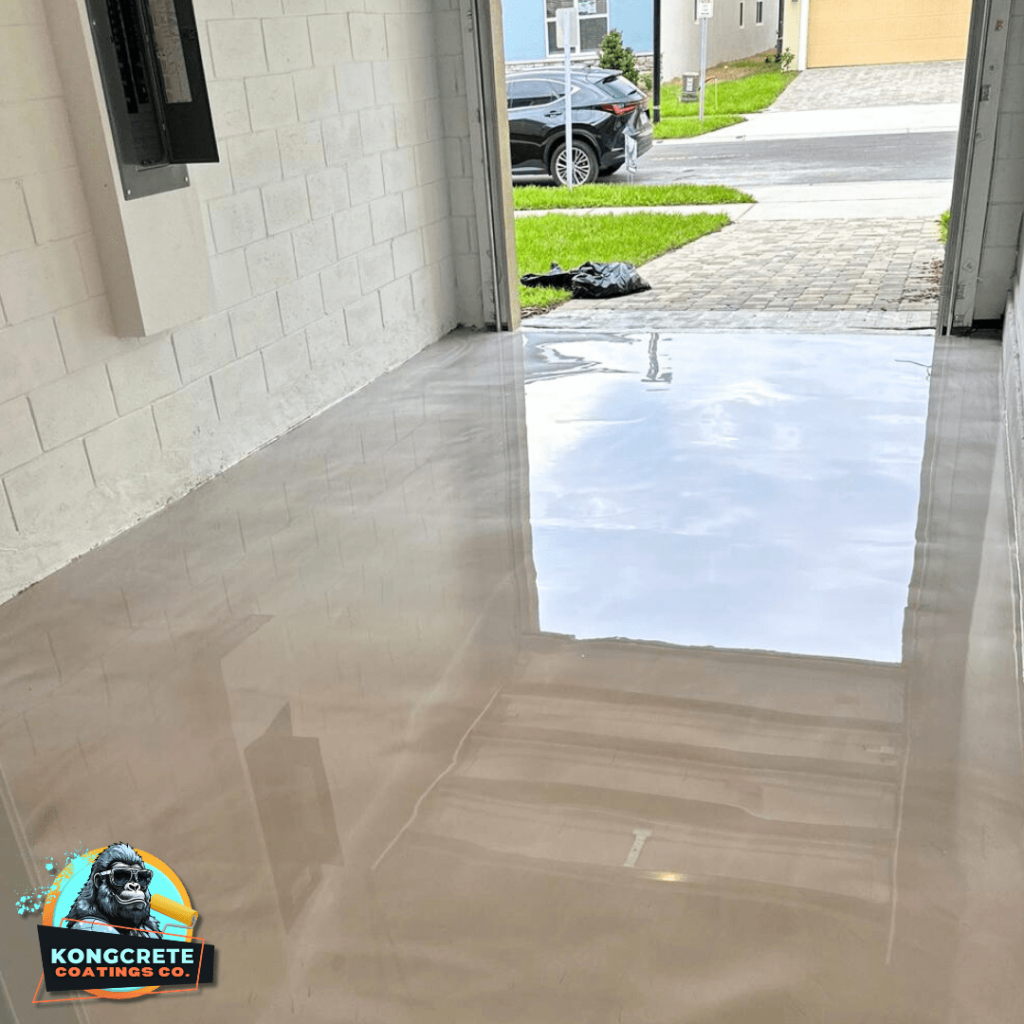
Choosing the wrong cleaner can quietly ruin even the toughest garage floor coating. Every bleach, vinegar, or citrus-based product interacts with the protective topcoat in a unique way, leaving behind a dull finish, etched surface, or weakened film.
For Orlando homeowners who want to keep their epoxy garage floor coatings looking fresh and lasting longer, understanding which cleaners do harm, why they do it, and how to maintain a safe routine makes all the difference.
Understanding Epoxy Garage Floor Coatings and Their Vulnerabilities
Epoxy garage floor coatings are built to shield concrete from stains, moisture, and daily wear. These coatings rely on a tough resin film that bonds tightly to the concrete surface. When the bond is strong and the topcoat remains intact, the floor resists water, oil, and common household messes. However, this protective layer is only as good as both the surface preparation before installation and the ongoing maintenance afterward. If the topcoat loses its integrity, the floor becomes vulnerable to chemical attack, scratches, and moisture intrusion.
Several factors determine how resilient a coated garage floor will be over time. The most common reason for failure is not the coating itself but poor surface preparation, as documented by industry sources. Acid etching, a method sometimes used to prep the floor, creates a much shallower surface profile compared to diamond grinding. This can lead to weak adhesion, making the coating more likely to peel or lift later.
Once the surface is coated, choosing the wrong cleaning products introduces new risks. Acidic, alkaline, and solvent-based cleaners each break down the topcoat in different ways. To keep floors like our epoxy garage floor coatings in Orlando looking their best, a pH-neutral cleaning routine is the safest way to protect gloss and film strength for years.
Why Bleach Damages Epoxy and Polyaspartic Floor Topcoats
leach is a common household cleaner, but using it on epoxy or polyaspartic garage floors can cause lasting harm.
- High-alkaline cleaners like bleach break down the resin structure in floor coatings. This process weakens the topcoat and leaves it more vulnerable to peeling, clouding, or even chemical burns over time.
- Repeated exposure to bleach can dull the original gloss of the coating. The chemical reaction may also cause the surface to become brittle, increasing the risk of cracks or chipping.
- Choosing a pH-neutral or manufacturer-approved cleaner prevents these problems. Sticking to gentle cleaning solutions helps preserve both the shine and durability of the garage floor coating.
Vinegar and Citrus Degreasers: Acidic Risks to Sealed Garage Floors
Vinegar and citrus-based degreasers seem like gentle options, but their acid content is a real concern for sealed garage floors. Acidic cleaners react with the protective film on epoxy or polyaspartic coatings. This reaction weakens the surface and may cause dulling or even a subtle etched pattern over time. An etched topcoat loses its natural shine and is more likely to attract dust and stains. Even small amounts of acid, used repeatedly, can erode the clear protective barrier.
That opens the door to moisture, grime, and other contaminants reaching the concrete underneath. Floors in humid areas like Orlando face even greater risk, since trapped moisture can accelerate this process. Acid etching is not always dramatic, but the damage builds with every cleaning cycle. The Garage Journal’s discussion on floor preparation notes that acid-washed surfaces are deliberately roughened so coatings can bond.
That same chemistry, when brought by vinegar or citrus cleaners after installation, slowly breaks down the film designed to keep the floor sealed. For anyone who wants their garage floor to keep its gloss and resist wear, skipping acidic cleaners is essential.
A pH-neutral product, used as part of a routine cleaning plan, helps the topcoat last longer and look better.
How Solvent-Based Cleaners Erode Gloss and Film Over Time
Many household and garage cleaners contain solvents that may seem harmless but actually cause long-term damage to coated floors.
- Solvent reaction: Solvent-based cleaners break down the molecular structure of a floor’s protective film. Over time, this chemical action strips away the gloss, leaving the surface dull and more prone to absorbing stains.
- Gloss erosion: Regular use of strong solvents can wear away the topcoat’s shine layer by layer. Even if the damage is slow, the result is a visibly faded finish that loses its original appeal.
- Film weakening: As solvents attack the topcoat, they make the surface more likely to develop fine scratches and dust. This opens the door for further damage from everyday use, cleaning, or Florida’s humid conditions.
Common Myths About “Natural” Cleaners on Coated Garage Floors
Many people believe that “natural” or plant-based cleaners are always gentle on coated garage floors. The truth is, natural does not always mean safe for epoxy or polyaspartic topcoats. Citrus degreasers, for example, are praised for their ability to cut through oil and grease. However, these cleaners often rely on acidic or solvent ingredients to dissolve tough stains. According to a review of degreaser types, solvent-based degreasers are highly effective at breaking down oils but can be harsh and may damage certain surfaces if not used correctly.
On a sealed garage floor, repeated use of acidic or solvent-heavy cleaners can slowly degrade the protective film, causing etching, dullness, or even premature wear. This goes against the common belief that if a cleaner is biodegradable or plant-derived, it must be gentle enough for any surface. Common myths about natural cleaners can lead to costly mistakes when maintaining a coated garage floor. It is essential to recognize that even household products labeled as “eco-friendly” or “green” may contain acids or solvents that harm the film over time.
For anyone in Orlando who wants to keep their garage floor looking its best, the safest approach is to select only pH-neutral cleaners specifically recommended for coated surfaces. This single step avoids the hidden risks that come with trusting a product simply because it sounds safe or natural.
The Importance of Using Only pH-Neutral Cleaners for Epoxy Longevity
Choosing the right cleaning product for garage floor coatings is a critical step that determines how long the protective finish will last.
- pH-neutral cleaners are specifically recommended for epoxy and polyaspartic garage floor coatings because they do not react with the resin or topcoat. These products clean away dirt and grime without causing chemical changes that would weaken the gloss or protection. According to general feedback shared in forums using harsh or reactive cleaners can lead to visible fading or damage over time, while pH-neutral options help maintain a clear, strong finish.
- Acidic and alkaline cleaners may promise powerful stain removal, but both types cause slow, permanent harm to coated garage floors. Acids found in vinegar or citrus degreasers can etch the topcoat, while alkaline ingredients in products like bleach break down the resin bond. The repeated use of either can leave the surface dull and more likely to attract stains.
- Solvent-based cleaners represent a third risk, as they gradually dissolve the top layer of the coating. With every use, the floor’s shine fades, and its resistance to spills, sand, or dust is reduced. This can be especially noticeable in high-traffic areas or where automotive fluids are common.
- Routine cleaning with a pH-neutral product not only protects the investment in a professionally installed garage floor but also makes day-to-day maintenance much easier. This approach helps prevent the costly need for repairs or early replacement, and it keeps the floor looking new for much longer.
Mechanical Cleaning Mistakes That Compound Chemical Floor Damage
Mechanical cleaning habits can compound chemical wear on a garage floor coating, so the cleaning method matters as much as the product.
- Use soft microfiber mops, nonabrasive cloths, and gentle brushes for routine cleaning. Abrasive pads, steel wool, and coarse powders can scratch or dull the topcoat, creating rougher areas that hold dirt and moisture and are harder to clean safely.
- Treat close-range pressure washing and aggressive scrubbing as higher-risk methods. A concentrated water jet or excessive force can wear the surface, especially where the coating is already scratched or weakened, so rinse with moderate pressure and keep the nozzle from sitting close to the floor.
- A weekly sweep or dust removal followed by occasional mopping with a pH-neutral or manufacturer-approved cleaner helps remove sand, pollen, and road film without adding unnecessary abrasion. If the finish already shows scratches or dull patches, gentler cleaning and prompt spill removal can help prevent further wear, while persistent damage may require a coating professional’s assessment.
Dealing With Spills: Immediate Action to Protect Garage Floor Coatings
Fast spill response is the best way to protect a garage floor coating from lasting damage.
- Wiping up spills as soon as they happen limits the time chemicals can react with the topcoat. This prevents etching and dull spots that develop when substances like fertilizer or battery acid are left to sit. Removing the spill quickly is especially important for acidic or alkaline substances, which are known to weaken the film.
- Rinsing the area with clean water after blotting up the spill helps dilute any remaining residue. This simple step reduces the chance of chemical reactions that erode the protective coating. Use a soft cloth or mop to avoid scratching the surface during cleanup.
- If a spill leaves a sticky or oily film, follow up with a pH-neutral cleaner approved for coated garage floors. Avoid using strong solvents or household cleaners that are not recommended for epoxy or polyaspartic finishes. Acting quickly and choosing the right product helps keep the floor looking its best and preserves the integrity of the coating.
Orlando’s Climate: Sand, Pollen, and Why Cleaning Cadence Matters
In Orlando, a practical cleaning cadence should account for sand, pollen, dust, humidity, and road film brought into the garage. Sweep or dust-mop about once a week to remove grit before foot and vehicle traffic can grind it against the coating. During rainy or especially humid periods, check for condensation and sticky residue, but avoid treating every buildup with aggressive chemicals or abrasive tools.
For routine washing, use a pH-neutral or coating-manufacturer-approved cleaner with a soft mop, then remove excess moisture rather than repeatedly scrubbing the surface. Rinse spills promptly, especially fertilizers, pool chemicals, battery fluids, and other substances that can attack a topcoat during prolonged contact. This balanced approach limits both chemical exposure and mechanical wear, helping epoxy garage floor coatings retain their gloss and protective film.
Three cleaner types harm garage floor coatings differently: bleach and ammonia break down the resin bond due to their high alkalinity, vinegar and citrus degreasers etch or dull the topcoat through acid reactions, and solvent-based cleaners erode gloss by attacking the protective film.
Each mechanism leaves the floor more likely to peel, stain, or lose its shine over time. Relying on a pH-neutral or manufacturer-approved cleaning routine preserves both the gloss and integrity of epoxy garage floor coatings, especially in Orlando’s climate, where sand, pollen, and humidity already challenge floor durability.